Thursday, April 25, 2013

Buy Local: Stay Local

http://www.fnec.cornell.edu/Our_Programs/FMNP/Documents/various_veggies.jpg
Photo Credit: Cornell University
      Farmers market season is just around the corner. You can already hear the sounds of people bartering over fresh produce and smell pastries being peddled at the stands. It doesn't always come to mind that this time of the community gathering over fresh produce is actually an environmentally and economically sound system.
     A LA times article suggests that farmers markets in America date back to 1979 when a few farmers set up shop in Gardena, Calif.  Since then the idea of bringing the produce straight from the farm to the consumer has blossomed.
Map of the United States
Infographic credit: USDA Agricultural Marketing Service
      The Agricultural Marketing Service for the United States Department of Agriculture reported that as of August of 2012 there are 7,864 farmers markets listed in the USDA's national farmers market directory. This is a 9.6 percent increase from 2011 the AMS reports.
      One reason many people choose to buy at farmers markets is to know where their food comes from. For example, in 2001 foot-and-mouth disease spread across England. Brian Halweil, author of "Home Grown, the Case for Local Food in a Global Market," writes that British citizens started asking where their food was coming from, growing wary of food that traveled a long distance.
      This knowing where food comes from is a major advantage of farmer's markets. The farmers can tell you the exact process that their food goes through from planting to selling.
     In 2012 a salmonella outbreak affected cantaloupes causing three people to die and 261 people to become ill. The CDC located the source of the outbreak to a farming operation in Owensville, Ind., Chamberlain Farms Produce, Inc.
     Near the start of the outbreak Amy Melton, manager of the farmers market at Minnetrista in Muncie, Ind. approached the farmer at the market that typically sells cantaloupes. Melton questioned the farmer about his farming practices and was assured that the farmer was using safe processes and allowed him to sell the produce.
     By selling produce at farmers markets, farmers can do their part to protect the environment by reducing the amount of travel the produce has to undergo to reach the consumer.
     What is your thought about farmers markets? Do you go to them? If so what is your favorite part? Leave a comment below letting me know what you think.
    Got an idea of something that you want to see covered? Leave a comment below and I will add it to a list of ideas. 

My dearest readers

I have had a blast writing these posts. I am writing this because I need your help! Coming up with fresh and new ideas can be troublesome. I try to write about what is modern and what concerns and would interest my audience. This is where you come into play! At the bottom of each post I have requested story ideas that you want to see covered. The response has been ... non existent. I put that there so I can hear what is on your mind. What is your concerns about Sustainable Agriculture? Please comment with your ideas and concerns. I want this blog to be more than one man's ramblings about sustainable agriculture.


That saying, I look forward to hearing what you have to say.

Regards,

Jacob Burbrink

Farming for Carbon

      Farmers have many options when deciding what to plant in their field depending on the region and season. They can choose from such staples as corn, beans, wheat and ... carbon?

    On September 15, 2011 the Australian Department of Climate Change and Energy Efficiency passed the Carbon Credits initiative. This allows farmers and land managers to earn carbon credits by practicing sustainable agriculture by storing carbon or reducing greenhouse emissions, the page states.
    The website also features an animation that clearly shows how carbon trading works.


Video credit: Australian DCCEE
     The United States is at the beginning steps of raising awareness of carbon farming. The United States Department of Agriculture held a workshop in 2012 to discuss carbon farming. In April the University of Maryland held a workshop on the topic.
     So what is the big deal about carbon farming? Like the video animation shows, carbon taxes are being put in place towards companies that emit a lot of carbon. Even though farmers are exempt from the tax, they can utilize green farming practices to reduce the amount of emissions produced.
     Farmers can do this by practicing some of the practices wrote about in my blog. They can use no-till farming to prevent the carbon from escaping the ground. They can use cover crops to absorb more carbon dioxide. These little acts build up to help protect the environment.
    When farmers choose to participate in these acts, they can earn credits which they can then sell to companies that produce a lot of emissions. These companies use the credits they buy to offset the amount of
carbon dioxide they release into the environment.
     Lets do the math here. Green farming methods that save money minus carbon emissions plus money for doing it: sounds like a pretty sweet deal.

   Would you participate in a Carbon Trade system at your farming operation? What is your opinion about this system? Leave a comment below letting me know what you think?

   Have a topic you want to see covered? If so leave a comment below and I will add it to a list of topics.

High-rise horticulture

photo credit: dcgreenworks

      Roofs are good for many reasons: they keep out the weather, they provide support, and now with the growing "green roof" movement they provide a spot for plant growth.
      The United States Environmental Protection Agency is working with cities across the US to promote the implantation of green roofs. Benefits, according to the EPA include reduced energy use, reduced air pollution and greenhouse gas emissions, improved human health and comfort, enhanced stormwater management and water quality and improved quality of life.
       The EPA says that green roofs can cool the temperature of the roof to below air temperature, while conventional rooftops can be up to 90 degrees warmer.
       Green roofs can not only be a source of relief from the heat, they can also be a source of food.
       Popupcity.net features five rooftop farms that produce produce in major cities. One of these farms, the Brooklyn Garage Farm, is boasted as the largest rooftop farming operation in the world.
A light spring sprinkling
photo credit: brooklyngarage

       Founded in 2010, the farming operation grows over 40,000 pounds of organically-cultivated produce per year, the operation's website states.
      New York is beginning to see possible green, other than the produce. In June of 2012 the city began looking for private developers to build a farm on a 200,000 square-foot roof of a warehouse, Patrick Wall reports.
Proposed Hunts Point Rooftop Farm Could Be World's Largest
pictured: a future farm, photo credit: google earth
       This potential operation would bring jobs and fresh produce for the area, Wall's story says. If you live in an area with a green roof you could buy food picked straight from your roof, talk about buying locally!

       What do you think of urban horticulture or green roofs? Do you live an area with one, or work one? If so leave a comment below sharing your experience.
      Got a topic you want to see covered? Leave a comment below and I will add it to a list of stories.
 .

Wednesday, April 24, 2013

Windbreakers: No... not the clothing item

          Soil erosion has been a long time problem for farmers. One example in American history where the loss of top soil lead to a national disaster is the Dust Bowl of the 1930s.

        A story on History.com about the Dust Bowl says that ranchers and farmers went to Oklahoma and Texas panhandles as well as neighboring sections of Kansas, Colorado, and New Mexico lured by promises of rich land.
http://www.english.illinois.edu/maps/depression/images/dustbowlmap.gif
photo credit: illinois.edu
       Here the farmers plowed under the native grass cover to make room for wheat farms to meet the growing demand, the History.com story says.
       "Wheat crops, in high demand during World War I, exhausted the topsoil," a story on PBS says, "Overgrazing by cattle and sheep herds stripped the western plains of their cover. When the drought hit, the land just blew away in the wind."
     In 1935 the Soil Conservation Service was formed to promote farm rehabilitation. They instructed farmers to reincorporate natural cover and plant trees.
      Why was this the solution? Trees and natural cover act as a windbreak to slow the erosion of the soil.
https://blogger.googleusercontent.com/img/b/R29vZ2xl/AVvXsEh6IT7IueJ4dhox6mKPh13260CktsnSYiIRiEMBhXnyZJMmL2A7hTn5tuXJCGS0vhUlopiI9hE86u_-eJ6sCTpmfLpv_Ug0yc3WSd6PFaiCev8tqzxXDue-ojeX9OzpmrBJy6GB9_jXlAGq/?imgmax=800
photo credit: egardens

      Windbreaks are useful not only to prevent soil erosion, but also to slow water erosion and protect wind-sensitive plants, a report by the United States Department of Agriculture says.
      The report says that the benefits of windbreaks include improved income, added protection, carbon storage and enhanced aesthetics.
      By incorporating windbreaks into your farm design you can add benefits to your production while preventing another Dust Bowl from happening.
     What do you think of windbreaks? Do you use them on your farm? If so what has your results been like? Leave a comment below letting me know.
    Have a topic you want to see covered? Leave a comment below and I will add it to a list of stories.
      

Aquaponics: a wetter way to plant

http://theaquaponicsource.com/images/NEW.Aquaponics%20Icon.jpg
infographic credit: aquaponicsource.com
      Growing crops in the winter usually involves greenhouses and carefully timed automatic watering system. In order to conserve water, some farms such as Aqua Farms utilize an aquaponic system.
      Oxford dictionary defines aquaponics as a system of aquaculture in which the waste produced by farmed fish or other aquatic animals supplies nutrients for plants grown hydroponically, which in turn purify the water.
      Myles Harston of Aqua Ranch says this system creates a closed ecosystem where if something affects the plants it affects the fish. 
      By using aquaponics, almost all of the water is recycled back into the process. 
      For more information on how hydroponics works check out HowStuffWorks.
      What do you think of hydroponics? Would you be willing to have a home set-up? Let me know by leaving a comment below. Have an idea of something you want covered? Leave a comment below and I will add it to a list of topics.

Thursday, April 18, 2013

Green Manure: Smells like sustainability


Photo Credit: Angelicaorganicfarm.com
      The word manure brings up many mental images to people. Images such as cattle yards, flies and brown substances that smell. Green farmers are attempting to change the notion of manure by making it green.
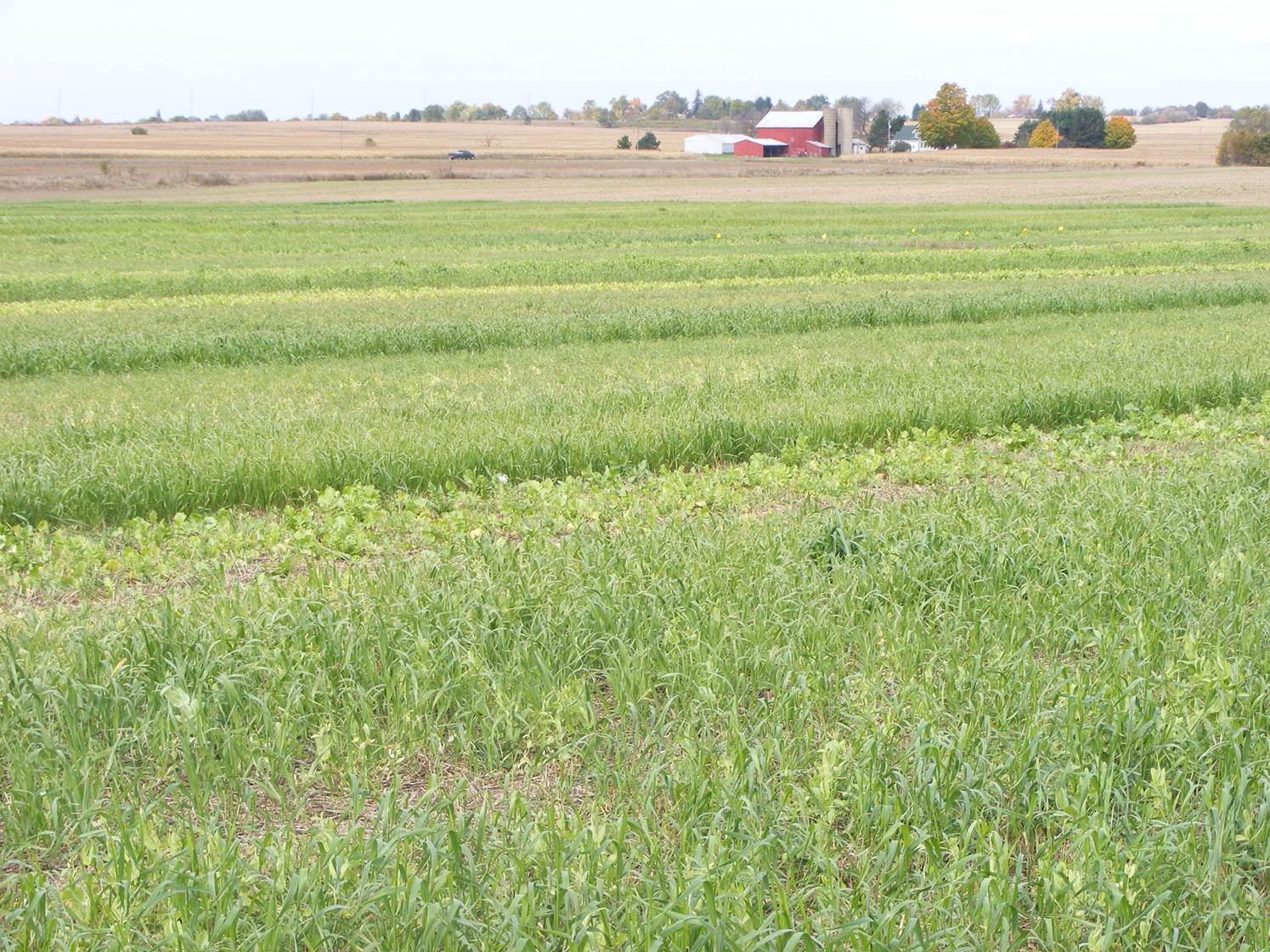
      According to about.com Green manure, or cover crops is plants grown for the purpose of adding nutrients to the soil to make it more fertile. In addition, a report by the Colorado master gardener program says that cover crops are beneficial for erosion protection, weed suppression, nitrogen fixation, soil structure creation and insect rests reduction. 
    Using cover crops as an alternative to traditional manure protects the environment by reducing polluted runoff. Science daily published an article saying that cover crops help to reduce the amount of free nutrients in the soil during intercrop periods. 
    The Department of Natural Resources released a feature length video to show why cover crop farming is beneficial to both the environment and the farmer's wallet. The video focuses on a town in North Carolina started using multi-species cover crops in their farming.
    By releasing videos focusing on sustainable agriculture, organizations are attempting to reduce apprehension to switch to no till and green manure.
    For farmers interested in how to incorporate cover crops into their field, be it a small garden or multi-acre farm, there are videos on YouTube with tutorials. One video by About.com shows the process of growing green manure.
   What is your opinion on cover crops? Leave a comment below saying if you would use this method in your farm or garden and why. Got a topic that you want covered? Leave a comment below and I will take your suggestions for future posts.
  

Thursday, February 21, 2013

Chickens living in the big city

Urban farming may be becoming more common as apartment dwellers in cities make use of rooftop gardens and windowsill planters. For some people, strawberries and tomatoes are not meeting their needs. Chickens are coming to the big city, and this is ruffling some people's feathers.
Urban chicken farming is the practice of raising chickens in a confined urban environment. The chickens are usually raised for the meat or eggs.
Urban chicken farming is spanning the country
Some major cities are allowing urban chicken farming. An USDA study with the Animal and Plant Health Inspection Service focused on urban chicken farming in four U.S. cities–Denver, Colo., Los Angeles, Cali., Miami, Fla. and New York, N.Y. New York, for example, allows hens in unlimited amounts as they are considered pets. The requirement is that they are kept clean. New York does not allow roosters though, as their crowing in the morning would disturb neighbors.

Meanwhile some cities are resisting allowing chickens. Muncie, Ind., for example currently does not allow chickens inside the city limits according to city ordinance section 90.19.


CDC Infographic
The Star Press produced a story about how some residents want Muncie to be more fowl friendly in 2010. In the piece they also covered why some people are weary to allow chickens in the urban environment.
One issue is the possibility of transmitting Salmonella.  According to the Centers for Disease Control and Prevention Salmonella causes an illness that is usually minor but in some cases requires hospitalization.
Salmonella can be contracted by contaminated food. Chickens are a carrier of the bacteria but contamination can easily be avoided by thoroughly washing your hands after contact with possible sources of contamination.
Other concerns of noise and smell are met with comparing chickens to normal household pets.
According to the Star Press article, the sound of a small group of hens is significantly less than that of a small dog. Likewise the smell of cat and dog waste is worse than the smell of chicken waste, however, it is still the responsibility of the owner to ensure that the odor does not get out of control.
If you are interested in finding out more about urban chickens, you can visit this link for a collection of websites and articles surrounding the issue.
What is your opinion on urban farming or urban chickens? Leave a comment below saying if you would want chickens living in the city or not and why. Got a topic that you want covered? Leave a comment below and I will take your suggestions for future posts.

Urban chickens infographic (friendseat.com)

friendseat.com
http://images1.friendseat.com/2012/08/Urban-ChickensGetting-To-Know-Your-Chicken1.jpg

Wednesday, February 13, 2013

How no-till farming saves money while helping the environment

As the spring planting season draws nearer farmers must make an important decision; to till or not to till. In 2010 Science Daily released findings of a milti-university study on the effects of more than 19 years of various tillage practices.
This study showed that no-till soil is more stable than plowed soil. The study goes into detail that this is due to the top inch of soil being the first line of defense against soil erosion by water or wind.
When soil is tilled this top inch is broken apart, allowing water and wind to carry away valuable topsoil. In turn organic nutrients are lost, causing the farmer to have to pay more for fertilizers to grow the crops.
Photo Credit: plantcovercrops.com
A report by the Fairfax county soil and water conservation district reported another benefit of no-till farming, increased fertility.
When no-till farming is utilized in coordination with the use of cover crops and green manures during the non-growing season soil is protected from erosion and nutrient-sapping weeds. The natural nutrients in the soil are conserved increasing the fertility of the soil.
Farmers across the nation are receiving awards for their efforts in conservation reguarding no-till farming.
A personal connection comes from the Harper Valley Farms, a family farm that I have visited on numerous occasions. In 2007 Albert Armand won the Conservation Farmer of the Year Award by the Indiana Farm bureau. Armand has since taught workshops on the benefits of No-Till farming. In March he will teach a workshop at the Purdue Small Farm Conference. Armand keeps his field fertile by using no-till farming with cover-crops and green manure which he obtains from the livestock on the farm. Armand says that by utilizing the no-till method of farming, labor costs of producing crops is reduced and helps increase the water holding capacity of the soil, allowing the crops to better survive Indiana's harsh summers.
What is your opinion on no-till farming? Leave a comment below saying if you like the no-till method of farming or not and why. Got a topic that you want covered? Leave a comment below and I will take your suggestions for future posts.

Wednesday, January 30, 2013

Pasture vs. CAFO

As demand for meat increases, companies such as McDonald's and Tyson resort to obtaining meat from Concentrated Animal Feeding Operations to meet the demand. According to the environmental protection agency, animal feeding operations are agricultural operations where animals are raised in confined situations. The animals, feed and waste products are in a small land area. In these operations the feed is brought to the animals instead of the animals grazing.

The issue that arises with CAFOs is waste management. The EPA says that the manure and wastewater have the potential to contribute such pollutants as nitrogen and phosphorus, organic matter, sediments, pathogens, heavy metals, hormones and ammonia that can negatively impact the environment.

A more sustainable and environmentally friendly way to raise meat is through the use of a pasture-based system. The GRACE communications foundation says that pasture-raising animals not only helps reduce environmental damage, but yields meat, eggs and dairy products that are more nutritious than those produced  on factory farms.

Many farmers choose not to pasture raise their animals because of reduced output. However, when taken into consideration the health benefits that come from pasture-raised animals, the benefits of pasture raising might outweigh the output benefit of CAFOs.
   
Pasture-raised animals
  • require fewer or no antibiotics, which can stay in the meat
  • eat grass, instead of unhealthy grain
  • are exposed to a diet free of unnatural feed additives
  • are hormone free
  • have higher levels of vitamins and a healthier balance of omega-3 and omega-6
Free range chickens have
  • 21 percent less total fat
  • 30 percent less saturated fat 
  • 28 percent fewer calories
  • eggs with 10 percent less fat, 40 percent more vitamins and 400 percent more omega 3's
In order for companies to reduce the use of concentrated animal feeding operations, there needs to be consumer demand. If consumers choose to buy more pasture-raised meat, stores will stock more. 

What is your opinion on CAFOs? Is there anything that this post left out that you wanted to know? Do you have a story idea that you want to see covered. Leave a comment below, and I will add your idea to the list.

Tuesday, January 22, 2013

Welcome!


Welcome!

Welcome to Farm Sustainability and You, your resource for information regarding issues surrounding running a sustainable farm. In this blog expect to see posts centered around issues such as the benefits of no-till farming, free-range vs. CAFO (Concentrated Animal Feeding Operations), and other posts surrounding agricultural sustainability. This blog publishes posts at least one per week in cooperation with the couse I am in, News 418.

Why Farm Sustainability?

There are two ways that you can look at why you should run a sustainable farming operation, environmental and economical.

Environmental Impact

Environmentally, farming is a source of a lot of environmental pollution. In fact, in 1996 the Centers for Disease Control established a link between spontaneous abortions and high nitrate levels in Indiana close to feedlots. Also, according to the National Resources Defense Council page on facts about pollution from livestock farms, California officials identify agriculture, including cows, as the major source of nitrate pollution in more than 100,000 square miles of polluted groundwater.

Economic Impact

According to the Environmental Working Groups page on Farm Subsidies, $6.01 billion went to Indiana farm subsidies alone. If farmers are able to run more sustainable farms, less money will have to be put into them allowing for the revenue to cover part of the national debt or assist in other issues surrounding sustainability.

Final Thoughts

Check back often for updates on how to run a sustainable farm. Got an issue that you want to see covered? Comment on this thread or send me an email, and I will add it to the list of topics if I like it.